

After work on a recent Thursday evening, I strolled down with my grog-loving colleague Mele to Bula Eats, a kava bar and light snacks restaurant situated above the Triangle Park in the center of Suva. This establishment had opened only a few weeks prior, close to my own arrival in Fiji’s capital.
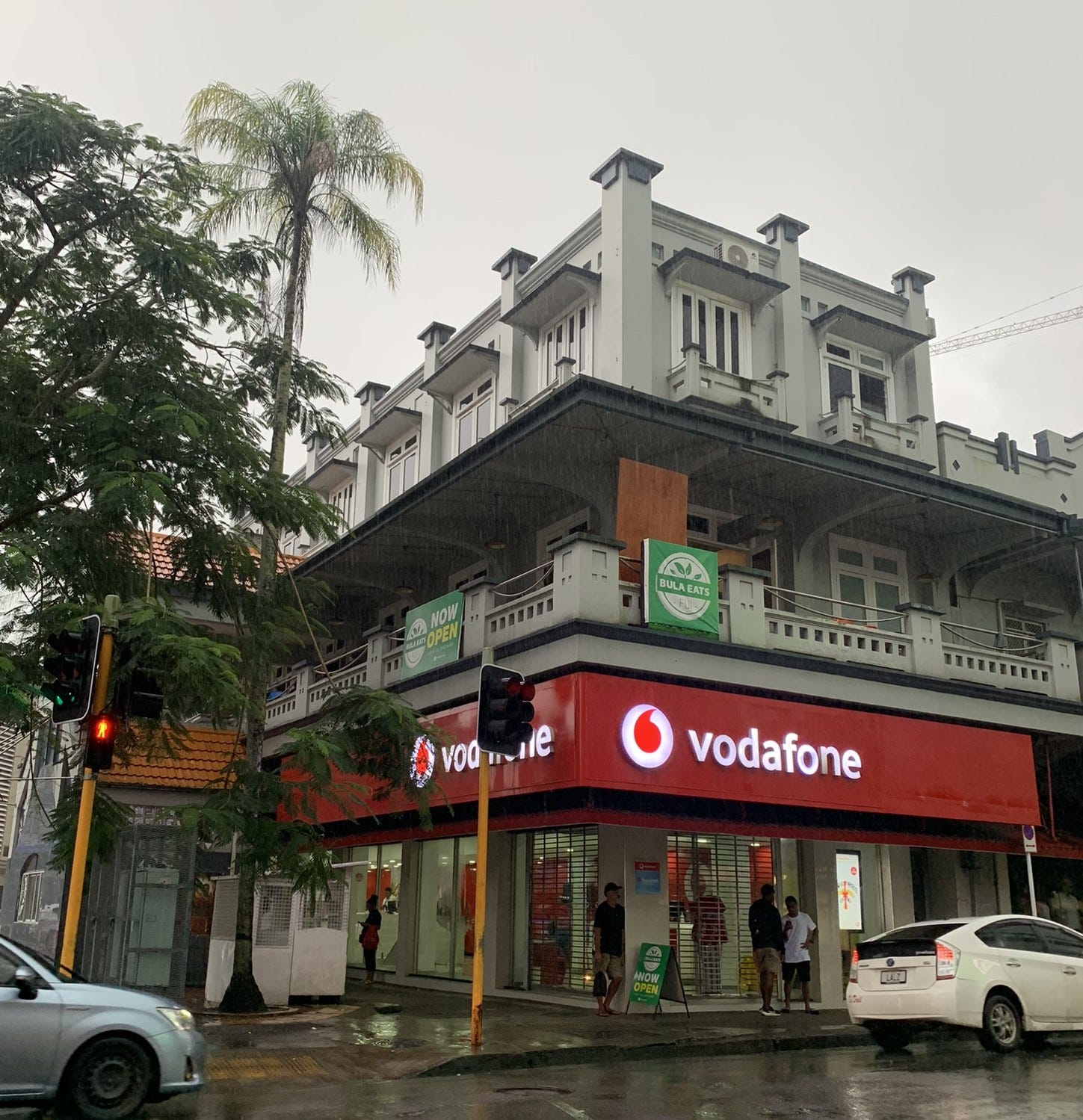
It was raining, as it had been for much of March, and the steps to Bula Eats on the second floor were like slick bathroom tiles. A wide veranda greeted us at the top of the stairs already populated with small groups taking in the misty late afternoon breeze.
Blue and green plastic basins half-filled with kava sat in the middle of most tables, standing in as poor substitutes for the traditional wood tanoa. I’m told that kava bars in Fiji often have a few tanoas but these are usually reserved or occupied quickly, with the rest of the clientele making do with plastic.
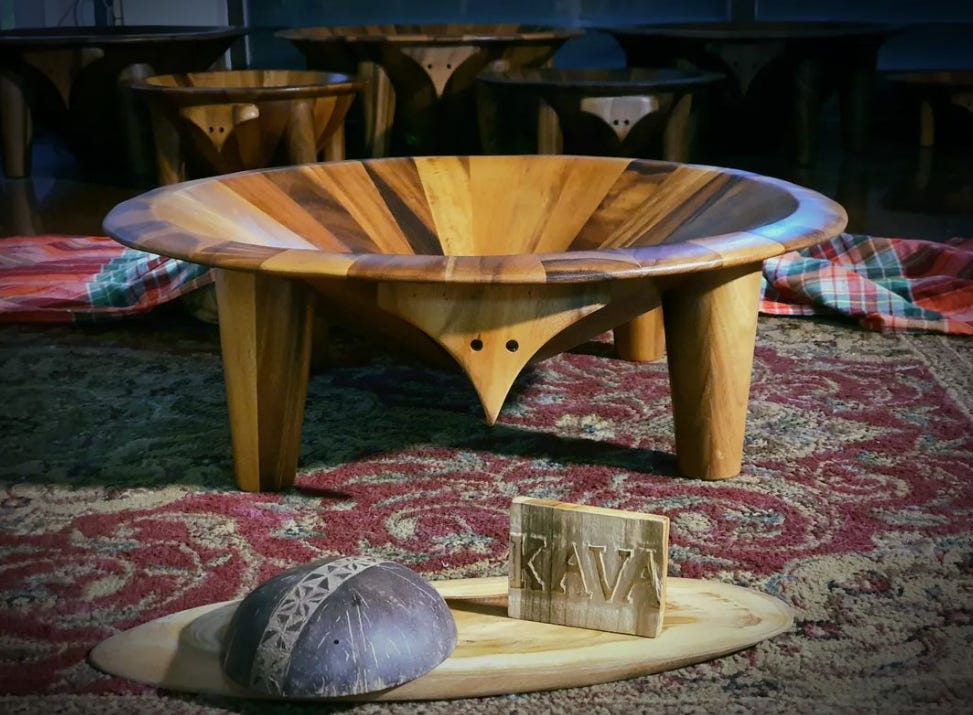
I was introduced to the wonderful world of traditional tanoas in, of all places, Thailand. Through the wonderful mystery that is life, I found myself in close association with Custom Tanoas, a small homemade company run by an unlikely crew of American expats in Bangkok with deep passion for kava and its special bowl. Throughout many years of trials, errors, and kilos of grog, Custom Tanoas has developed into a household name in the kava world. Drawing their design from an in-depth study of traditional tanoas across the Pacific - the Custom Tanoa has begun popping up in logos for kava clubs and kava bars from the airid salt flats of Utah to royal residences in Tonga (more on that story later 😉) and - much to my recent astonishment - a little kava shack on Brown Street in Suva!
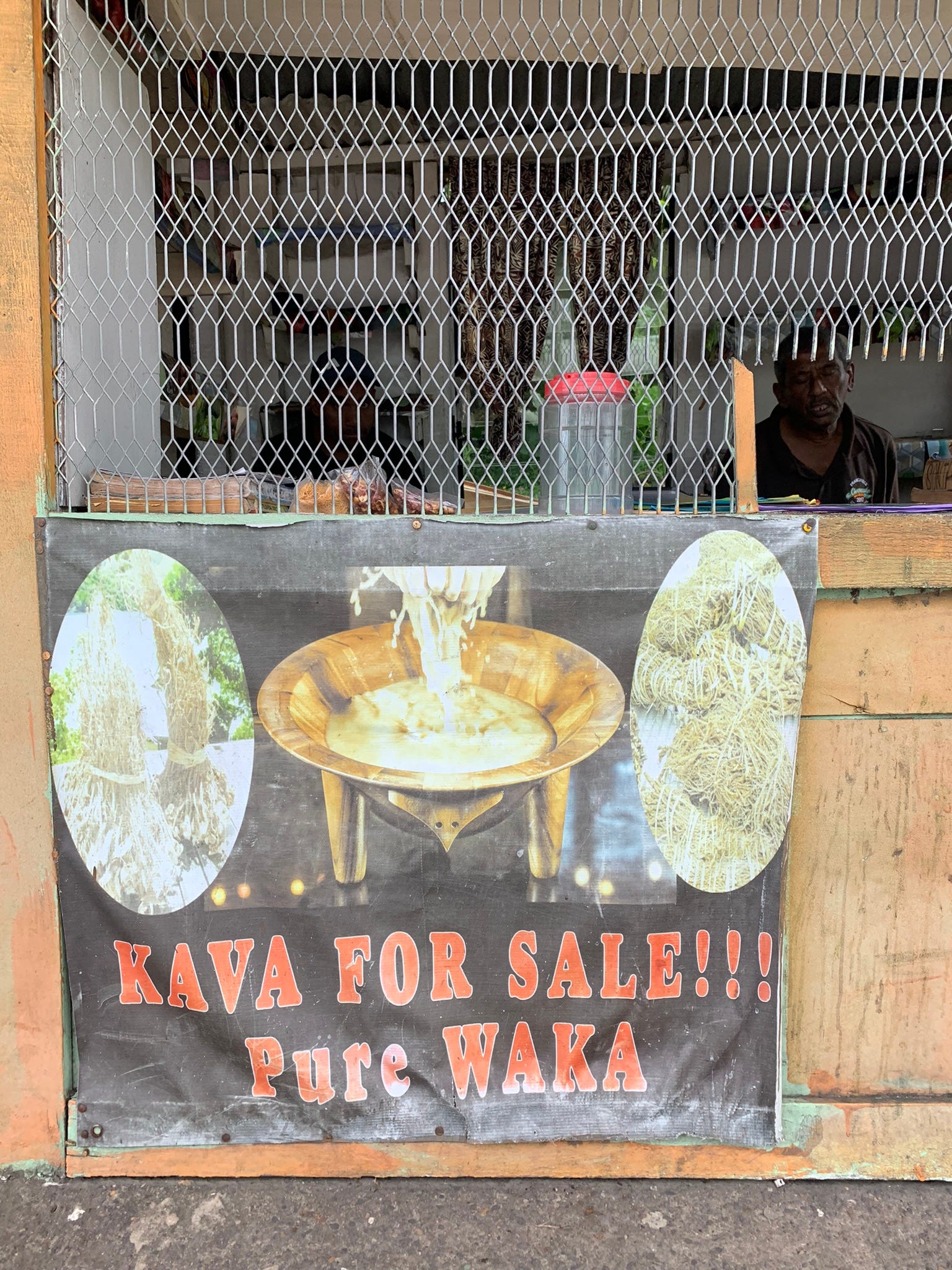
The full Custom Tanoa story is a rich and unexpected adventure into the heart of kava’s most iconic symbol which will continue to gradually unfurl throughout these kronicles. I brought my own 2.5 gallon Custom Tanoa with me here to Fiji and have already enjoyed sharing kava from it with new friends surprised to learn of its unusual Thai origin.
This was precisely the case just minutes after arriving at Bula Eats. Walking along the veranda my colleague spotted a friend sitting calmly at a table nearby. After being introduced to Waisea I learned that he works in the Ministry of iTaukei Affairs (iTaukei being the native name for indigenous Fijians and their language). After a smooth first bilo from the plastic basin, we immediately began discussing kava and I was soon showing him photos of Custom Tanoas in various sizes.
With a design bearing considerable likeness to the Fijian tanoa, he expressed some concern that such traditional objects were not made in Fiji itself. Understanding the potent symbolic nature of tanoas for cultures of the Pacific, we began a similar conversation that my friends running the Thai company have been having for decades.
Sharing images and stories of these non-native tanoas online for many years, the response Custom Tanoas regularly receives from Pacific Islanders has been overwhelmingly positive. From these interactions, we have learned that - due largely to cost and shifting cultural values - the decidedly untraditional plastic basin now frequently supplants the tanoa’s central role in the sharing of kava. Many are pleased to see traditional tanoas being produced and made accessible for kava drinkers residing outside of the Pacific.
Traditionally carved out of a single piece of hardwood, usually from the vesi tree in Fiji, tanoas are neither cheap nor plentiful. A valuable timber on small islands with little landmass, a host of economic and environmental challenges arise in sustainably producing large quantities of traditional tanoas. Custom Tanoas on the other hand carry an innovative design that addresses these challenges without compromising on quality. Instead of a single block of wood, multiple treated ‘wedges’ of Acacia - a fast growing sustainable hardwood - are glued together and then carved on a specialty lathe to form the bowl shape. This method produces an extremely durable foodsafe tanoa that is more resilient to climate and atmospheric changes known to be serious hazards for traditional tanoas when transported overseas.
Continuing our talanoa I also learned from Mele and Waisea that up until WWII kava consumption was reserved almost entirely for chiefs and official ceremonies in Fiji. After the war, Fiji experienced several rapid cultural shifts that transformed many aspects of its traditional society - perhaps most notably in the widespread drinking of kava by every social class. This is another reason why tanoas, closely associated with ceremonial etiquette and traditional chiefly power, may not often be seen in some of the dingier modern kava establishments.
Though the lights in Bula Eats were low, it certainly wasn’t dingy. Friendly wait staff cruised between tables refilling kava basins slinging ‘Bula!’s and smiles across the room to new customers as a live band was warming up. The wall behind the band was covered by a large chalk mural of a bure, the traditional Fijian house, which we had a grand view of sitting directly opposite.
“Taki” was called for more bilos to be shared and the conversation switched to iTaukei for a while as the band started to play. Five Fijian men, each playing a guitar or ukulele serenaded the audience in lively island tunes which Mele told me had been adapted from the originals with the aid of electric instrumentation and backing tracks. The mood was copasetic and, after Joe from the Ministry of Trade joined us, kava continued to flow.
This being my first time visiting a ‘kava bar’ I was somewhat surprised to not see a single sign or menu with any mention of kava being served… yet practically every table was equipped with a well-stocked basin. Mentioning this perplexity to my compadres they just laughed, “Everyone knows it’s $10 FJD ($4.45 USD) for a refill”. Amused by the irony of a kava bar that doesn’t have kava on the menu, I enjoyed the next bilo, savoring its tang - but not too much - for beyond the first few shells one wishes much more to savor effect of the kava rather than its taste.
Making use of heavy amplification, some subtlely was lost as the band continued to play and the grog got deeper into my system. At one point, the Fijian rhythms felt too much like strong waves pounding the fine sand of my relaxed interior so I stood up for some fresh air and a trip to the john.
The view out over Suva’s dark wet streets from the veranda was quiet and refreshing as hypnotic sheets of rain glazed the windows of a trundling bus below. This was a new and enjoyable form of nightlife that felt both satisfying and a lot more wholesome than sinking pint after pint in the pub. After 17 years of life in London I’d experienced plenty of the latter for better and for worse - kava is a new paradigm entirely.
I rejoined my table for another round of bilos and to soak up the last few ukulele riffs before the band packed up. By now we were all pleasantly ‘with the root’ and content to simply smile along with the undulating Fijian harmonics.
After bidding my new friends farewell, a mellow taxi ride back up Waimanu Road delivered me to perhaps the most delicious of kava’s effects - a deep and restorative night’s sleep.
Ni sa moce [pronounced nee-saa-mo-de] Farewell/goodnight in iTaukei
Have you ever visited a kava bar? From research I’ve learned they come in so many styles - I’d be curious to know your thoughts in the comments.
This lovely story flows so nicely. I felt like I was right there along side you for the evening. And now I'm craving kava!
To answer your question, the last kava bar I visited was in Phoenix. The clientele was... let's just say, not my people. If it were a normal bar serving alcohol I probably would have walked in, and then right out again. But because of the peaceful kava energy, no one showed even a hint of aggression or intolerance toward me. I ended up making some friends for the evening and having a good time. I credit kava for allowing us to cross the cultural barriers.